
-
dazemoonmarketing
- June 17, 2026
- No Comments
Author’s Note
This article is based on industry knowledge, marble sourcing expertise, and practical insights from luxury residential and commercial projects across India. The purpose of this guide is to help homeowners, architects, builders, and interior designers understand the differences between Italian and Indian marble so they can make an informed investment decision.
Table of Contents
- Introduction
- Understanding the Key Differences Between Italian and Indian Marble
- Which Marble Performs Better for Modern Homes and Commercial Projects?
- Factors to Consider Before Making Your Final Choice
- Conclusion
- FAQs
Introduction
Marble has always been one of the most preferred natural stones for luxury construction and interior design. Whether it is a premium villa, a luxury apartment, a five-star hotel, or a commercial building, marble adds elegance, durability, and timeless beauty to any space.
One of the most common questions buyers ask is whether Italian marble is better than Indian marble. While both options have their own strengths, the right choice depends on your project requirements, budget, design goals, and maintenance expectations.
With growing demand for luxury interiors, buyers today have access to a wide range of marble varieties. From premium imported collections to high-quality domestic stones, selecting the right marble can significantly influence the overall appearance and value of a property.
This guide explores the major differences between Italian and Indian marble and helps you determine which option is best suited for your project.
Understanding the Key Differences Between Italian and Indian Marble
Italian marble is globally recognized for its luxurious appearance, refined texture, and artistic veining patterns. Popular varieties such as Statuario, Calacatta, Carrara, and Botticino are often seen in luxury residences and high-end hospitality projects.
The popularity of Italian marble in kishangarh has increased significantly because buyers can now access world-class imported collections through India’s largest marble market.
Indian marble, on the other hand, has a strong reputation for durability and affordability. Varieties such as Makrana, Ambaji, Banswara, and Morwad marble have been used in residential and commercial construction for decades.
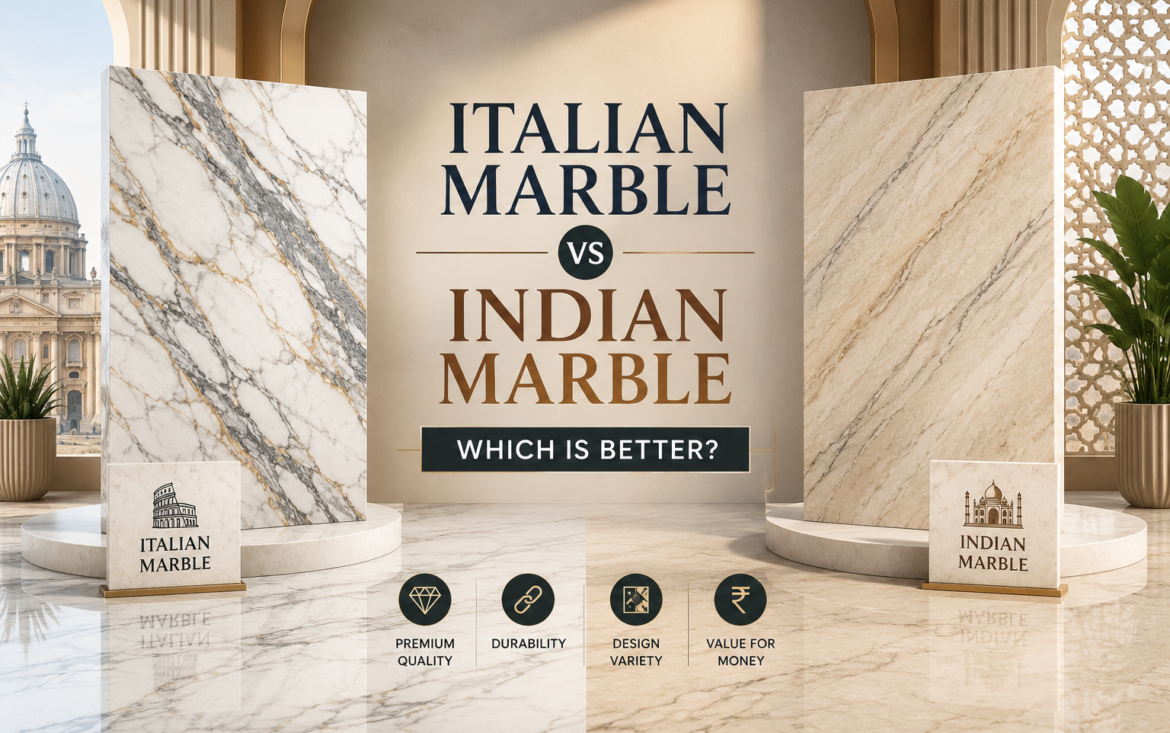
The biggest difference between the two lies in their visual appeal. Italian marble generally offers softer textures, brighter backgrounds, and more dramatic veining. These characteristics create a premium look that is highly sought after in luxury interiors.
Indian marble typically features a denser structure and simpler patterns. While it may not always offer the same visual drama as imported marble, it remains an excellent choice for projects that prioritize durability and cost-effectiveness.
Many architects and designers prefer sourcing imported collections from the Best imported marble supplier in India to ensure authenticity, quality control, and access to exclusive marble varieties.
Which Marble Performs Better for Modern Homes and Commercial Projects?
The answer depends entirely on the purpose of the project.
For luxury villas, premium residences, boutique hotels, and high-end commercial spaces, Italian marble is often the preferred choice. Its sophisticated appearance instantly elevates interiors and creates a sense of exclusivity that appeals to modern buyers.
Italian marble performs exceptionally well in:
- Luxury flooring
- Feature walls
- Hotel lobbies
- Designer staircases
- Premium bathrooms
Its natural veining creates unique patterns, ensuring that every installation becomes a one-of-a-kind design statement.
However, Indian marble offers several practical advantages. Its dense composition often makes it more resistant to daily wear and tear, making it suitable for high-traffic areas.
Indian marble is commonly used in:
- Residential flooring
- Office spaces
- Commercial buildings
- Educational institutions
- Large-scale housing projects
Cost is another important factor. Many homeowners research Italian marble flooring price India before making a purchase because imported marble generally involves higher investment due to sourcing, transportation, and processing costs.
For projects where luxury aesthetics are a priority, Italian marble often delivers superior visual impact. For projects focused on practicality and budget efficiency, Indian marble remains a reliable option.
Factors to Consider Before Making Your Final Choice
Choosing between Italian and Indian marble should involve more than simply comparing appearances.
First, consider the design objective of your project. If you are aiming for a premium, international look, imported marble may align better with your vision.
Second, evaluate maintenance requirements. Italian marble typically requires professional care and periodic maintenance to preserve its polished finish. Indian marble often requires less upkeep and may be better suited for busy households.
Third, inspect full slabs before purchasing. Viewing complete slabs allows buyers to assess veining patterns, color consistency, and overall quality.
Many buyers visit a trusted Marble supplier in Kishangarh because the city offers access to extensive collections and expert guidance under one roof.
Supplier credibility is equally important. Working with an experienced Marble dealer in Kishangarh helps ensure that buyers receive genuine products, transparent pricing, and professional recommendations.
For those seeking both variety and quality, visiting the Best marble shop in Kishangarh can make the selection process easier by allowing direct comparison between imported and domestic marble collections.
Ultimately, the right marble should complement your design goals while meeting practical requirements such as durability, maintenance, and budget.
Conclusion
There is no single answer to whether Italian marble or Indian marble is better. Both materials offer distinct advantages and serve different purposes.
Italian marble is widely admired for its luxury appeal, elegant veining, and ability to create breathtaking interiors. It remains the preferred choice for premium residential and hospitality projects where aesthetics play a major role.
Indian marble stands out for its durability, affordability, and ease of maintenance, making it an excellent option for a wide range of residential and commercial applications.
The best decision comes from understanding your project’s specific requirements and selecting marble that balances beauty, performance, and long-term value. With proper planning and expert guidance, both Italian and Indian marble can deliver exceptional results and timeless elegance.
FAQs
1. Which marble is better for luxury homes?
Italian marble is generally preferred for luxury homes because of its elegant appearance and distinctive natural veining.
2. Is Indian marble more durable than Italian marble?
In many cases, Indian marble has a denser structure and performs well in high-traffic areas.
3. Why is Italian marble more expensive?
Italian marble involves import costs, international transportation, premium processing standards, and limited availability.
4. Can Italian marble be used for flooring?
Yes, Italian marble is widely used for luxury flooring in villas, hotels, apartments, and commercial spaces.
5. How can I choose between Italian and Indian marble?
Consider factors such as design goals, budget, durability requirements, maintenance expectations, and project type before making a final decision.