-
dazemoonmarketing
- September 29, 2026
- No Comments
Author’s Note:
Combining Italian marble with wood is a popular approach in contemporary residential design because it brings together the natural elegance of stone and the warmth of wood. However, achieving a balanced interior requires careful coordination of colors, textures, finishes, lighting, and proportions. This guide offers practical recommendations for homeowners, architects, interior designers, and builders looking to create visually harmonious spaces using these two natural materials.
Table of Contents
- Why Italian Marble and Wood Work Well Together
- How to Choose the Right Marble and Wood Combination
- Design Ideas for Different Interior Spaces
- Practical Buying, Installation, and Maintenance Tips
- Conclusion
- FAQs
1. Why Italian Marble and Wood Work Well Together
Italian marble and wood complement each other because they offer contrasting visual characteristics. Marble generally provides a smooth, elegant surface with distinctive natural veining, while wood introduces warmth, texture, and an organic appearance.
When combined thoughtfully, these materials can create interiors that feel luxurious without appearing excessively decorative. The combination works particularly well in modern villas, premium apartments, contemporary homes, and hospitality interiors.
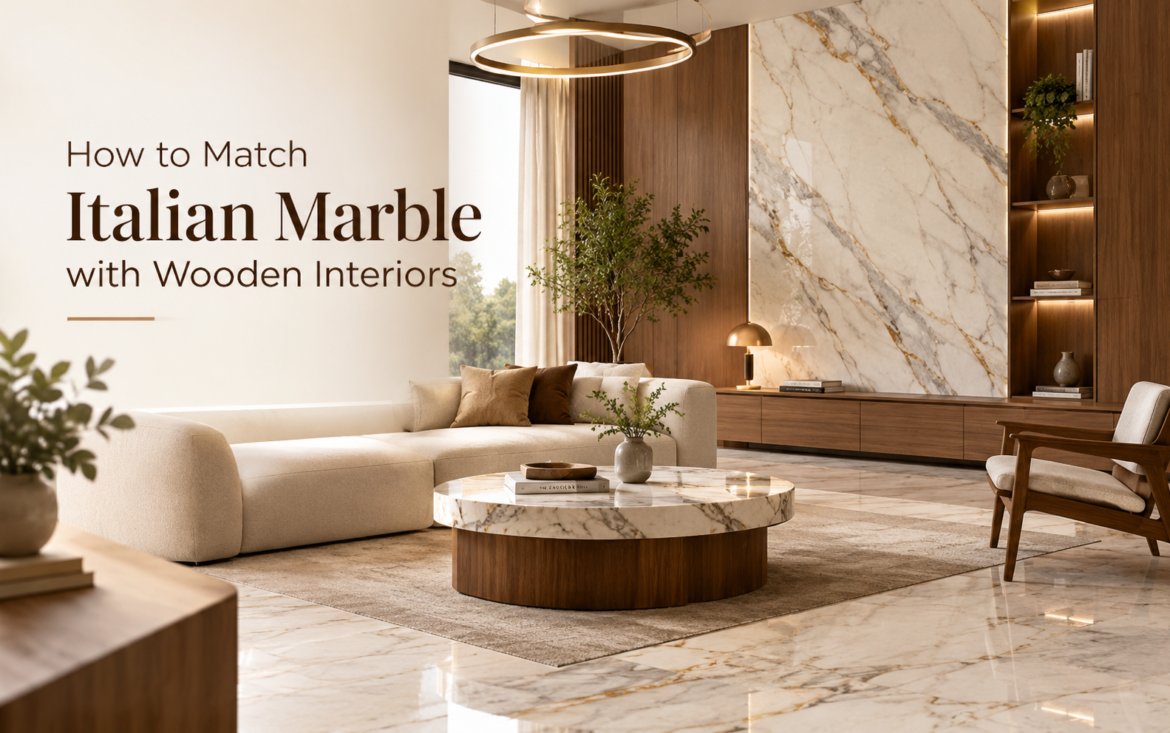
For example, white marble flooring paired with walnut furniture can create a sophisticated contrast. Beige marble combined with natural oak can produce a softer, warmer atmosphere, while grey marble with dark wooden finishes can support a contemporary interior concept.
The key principle is balance. If the marble has dramatic veining, simpler wooden furniture can prevent the room from looking visually crowded. Similarly, heavily textured or dark wood can be paired with marble featuring subtle patterns.
A knowledgeable Best imported marble supplier in India can help buyers understand the available marble varieties, finishes, slab patterns, and their suitability for different interior applications.
2. How to Choose the Right Marble and Wood Combination
The first step is to establish a consistent color palette. Instead of selecting marble and wood independently, compare their undertones and overall appearance under the lighting conditions of the actual space.
White marble with natural wood
White marble with grey or soft beige veining works well with oak, teak, walnut, and other natural wood tones. This combination is suitable for living rooms, bedrooms, and open-plan interiors where brightness and warmth are equally important.
Beige marble with warm wooden finishes
Beige marble paired with medium or light wood creates a comfortable and welcoming atmosphere. It is particularly suitable for dining areas, bedrooms, and spaces designed around earthy colors.
Grey marble with dark wood
Grey marble can be combined with walnut or deeper wood shades for a contemporary, structured appearance. This palette works well in television units, formal living rooms, study areas, and feature walls.
Dramatic marble with minimal wood detailing
Marble with bold veins or contrasting patterns should be treated as a design feature. Pairing it with plain wooden cabinetry, clean furniture lines, and restrained accessories allows the stone’s natural character to remain visible.
Finish selection also matters. Polished marble reflects light and creates a glossy appearance, while honed finishes offer a softer, less reflective surface. Matte or natural-looking wood finishes can complement either option, depending on the desired effect.
Homeowners exploring Italian marble in kishangarh should inspect full slabs wherever possible. Natural veining and color variation can look different in small samples, so comparing the actual stone with wood samples is useful before finalizing the design.
3. Design Ideas for Different Interior Spaces
Living rooms provide several opportunities to combine these materials. Marble flooring can establish a continuous visual foundation, while wooden furniture, wall panels, and ceiling details introduce warmth. A marble feature wall behind a television unit can also be balanced with wooden storage or decorative slats.
In bedrooms, consider using marble flooring with wooden beds, wardrobes, and bedside tables. Light-colored stone and warm wood can make the space feel open and comfortable. Avoid introducing too many competing patterns, especially in smaller rooms.
For dining areas, a marble floor combined with a wooden dining table creates a natural contrast between smooth stone and textured timber. Coordinating the table’s wood tone with nearby cabinetry or doors can make the interior feel more cohesive.
Kitchens require a practical approach. Marble may be used for selected flooring, backsplashes, or countertops, depending on the variety and maintenance expectations. Wooden cabinetry can soften the overall appearance, but surfaces near sinks and cooking areas should be selected and installed with moisture and cleaning requirements in mind.
For staircases and corridors, marble treads or flooring can be coordinated with wooden handrails, wall panels, or decorative elements. Consistent wood tones and carefully planned stone patterns help maintain continuity between different levels of the home.
An experienced Marble supplier in Kishangarh can help homeowners and designers compare marble colors and slab patterns that complement the project’s selected wood finishes.
4. Practical Buying, Installation, and Maintenance Tips
Before purchasing materials, prepare a coordinated sample board containing the selected marble, wood finish, wall paint, and major furniture colors. View it in natural daylight and artificial lighting because both can change how colors appear.
Budget planning is equally important. When comparing Italian marble flooring price India, consider more than the stone’s quoted rate. Transportation, cutting, installation, polishing, wastage, and finishing can affect the total project cost.
If you visit a Best marble shop in Kishangarh, ask to inspect actual slabs, confirm thickness and quantity, and discuss whether enough visually compatible material is available for the entire project.
A professional Marble dealer in Kishangarh should also clarify delivery conditions, material inspection, fabrication requirements, and installation coordination.
For installation, ensure that the flooring substrate is properly prepared and that the stone is laid using a suitable method. Wooden flooring, panels, and cabinetry should be installed with appropriate allowances for movement and moisture conditions.
Marble requires careful maintenance because acidic substances can etch its surface. Use stone-safe cleaning products, clean spills promptly, and follow professional recommendations for sealing where appropriate. Wood should also be cleaned with suitable products and protected from excessive moisture.
5. Conclusion
Matching Italian marble with wooden interiors is about creating harmony between two materials with distinct natural characteristics. The right combination depends on color undertones, veining, wood species, finishes, lighting, and the function of each room.
For a cohesive result, select materials together, inspect actual samples, plan the installation carefully, and consider maintenance before finalizing the design. Whether used in living rooms, bedrooms, kitchens, or staircases, marble and wood can create interiors that combine elegance with warmth and everyday practicality.
FAQs
1. Which wood colors go well with Italian marble?
Oak, teak, walnut, and other natural wood tones can complement Italian marble. The ideal choice depends on the marble’s undertones, veining, room lighting, and overall interior style.
2. Can white Italian marble be combined with dark wooden furniture?
Yes. White marble with dark walnut or similar wood creates a noticeable contrast that works well in contemporary and classic interiors. Balance the combination with suitable lighting and neutral accessories.
3. Is polished marble suitable for wooden interiors?
Yes. Polished marble can complement wooden furniture and panels by adding reflectivity and a refined appearance. However, flooring in wet or frequently used areas should be selected with slip resistance and practical maintenance in mind.
4. How can I make marble and wood interiors look less crowded?
Use a limited color palette, avoid combining multiple dramatic patterns, and allow one material to become the primary visual feature. Simple furniture and coordinated finishes help maintain balance.
5. How should marble and wooden surfaces be maintained?
Clean marble with stone-safe products and avoid acidic cleaners. Protect wooden surfaces from excessive moisture and use suitable wood-care products. Follow professional recommendations for sealing and maintenance according to the specific materials.