
-
dazemoonmarketing
- September 18, 2026
- No Comments
Author’s Note:
Villa interiors demand a careful balance between luxury, functionality, proportion, and long-term practicality. Italian marble can contribute to this design language through its natural veining, refined surface, and wide range of colors and patterns. However, successful marble interiors depend on selecting the right stone for each space rather than using the same material everywhere. This guide explores practical design ideas for homeowners, architects, interior designers, and builders planning sophisticated villa interiors.
Table of Contents
- Why Italian Marble Works Well in Villa Interiors
- Italian Marble Design Ideas for Different Villa Spaces
- How to Select the Right Marble for Your Villa
- Installation, Maintenance, and Buying Considerations
- Conclusion
- FAQs
Why Italian Marble Works Well in Villa Interiors
A villa typically includes larger rooms, open-plan areas, grand entrances, staircases, bedrooms, bathrooms, and multiple entertaining spaces. Italian marble can work particularly well in such environments because natural stone patterns can become an important part of the interior design.
One of the biggest advantages is visual versatility. Depending on the variety and finish, marble can create a minimalist, contemporary, classic, or highly luxurious appearance. White marble with subtle veining can make spaces feel bright and spacious, while stronger patterns can be used to create statement surfaces.
For architects and interior designers, marble also provides an opportunity to coordinate flooring, walls, countertops, staircases, and decorative elements. Instead of treating every surface independently, the stone can become part of a unified material palette.
When selecting imported stone, buyers should work with a knowledgeable Best imported marble supplier in India who can provide information about the material’s characteristics, available slabs, finishes, and suitability for specific applications.
Italian Marble Design Ideas for Different Villa Spaces
The entrance foyer is one of the most effective places to introduce marble. Large-format flooring with carefully selected veining can create an impressive first impression without requiring excessive decoration. A contrasting border or a central marble pattern can also define the entrance while maintaining a sophisticated appearance.
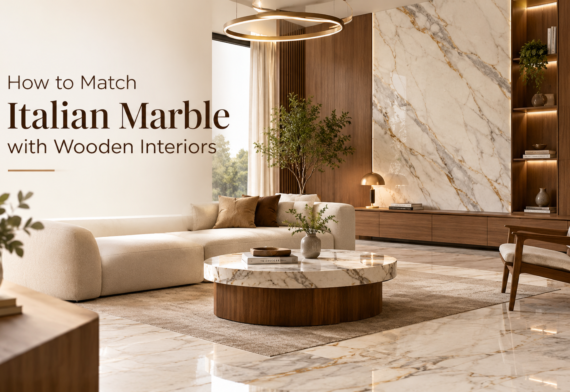
In living rooms, book-matched marble walls can become a natural focal point. Two matching slabs can be positioned so that their veins create a mirrored visual effect. This approach works particularly well behind a television unit, fireplace feature, or formal seating arrangement.
For dining areas, marble flooring can provide a seamless connection between the dining space and adjacent living areas. A neutral stone with controlled veining can complement wooden furniture, metallic accents, upholstered seating, and contemporary lighting.
Bedrooms require a slightly different approach. Instead of covering every surface with highly dramatic stone, designers can use marble selectively on flooring, bedside feature walls, or dressing areas. Softer patterns generally create a calmer visual environment.
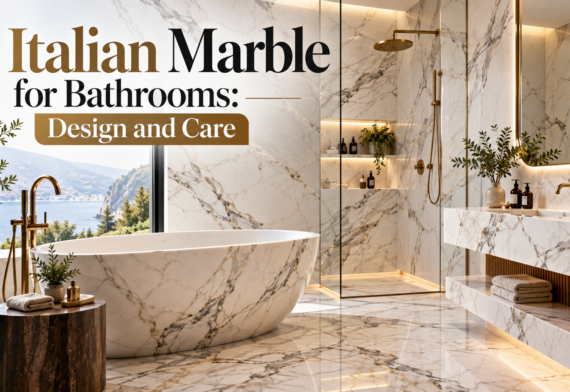
Bathrooms offer another opportunity for coordinated marble design. Matching wall and floor materials can produce a hotel-inspired appearance. However, the finish and slip-resistance characteristics should be considered carefully, particularly in wet areas.
Staircases are especially suitable for premium marble because the stone can connect multiple floors visually. Consistent veining and properly fabricated edges can create a refined architectural detail.
For homeowners exploring Italian marble in kishangarh, viewing complete slabs is important because natural patterns can appear considerably different from small samples or digital images.
How to Select the Right Marble for Your Villa
The right marble should be selected according to the space, lighting, design objective, and maintenance expectations.
Start by considering the room’s natural and artificial lighting. A brighter marble can enhance areas with limited natural light, while strongly veined varieties can add depth to larger, well-lit rooms.
Next, consider the scale of the space. Large rooms can accommodate bold patterns and larger slabs, while smaller rooms may benefit from restrained veining and lighter tones.
The intended use is equally important. High-traffic flooring requires careful consideration of finish, maintenance, and installation quality. Kitchen and bathroom surfaces require additional attention because they may come into contact with stains, moisture, or acidic substances.
Budget should also be evaluated as a complete project cost. When researching Italian marble flooring price India, remember that the material price is only one part of the overall expense. Fabrication, transportation, installation, wastage, polishing, finishing, and maintenance can influence the final investment.
A professional Marble supplier in Kishangarh can help buyers compare varieties and understand differences between slabs, finishes, thicknesses, and applications before finalizing the selection.
Installation, Maintenance, and Buying Considerations
A premium marble selection needs equally careful installation. Before purchasing, confirm slab dimensions, thickness, quantity, expected wastage, installation method, joint treatment, polishing requirements, and delivery conditions.
For book-matched walls or floors with strong veining, slab planning should be completed before cutting. This allows the installer and designer to determine how the natural pattern will flow across the finished surface.
Maintenance should also be considered during the design stage. Marble is sensitive to acidic substances, which can cause etching on polished surfaces. Suitable stone-care products should therefore be used, and spills should be cleaned promptly.
If you visit a Best marble shop in Kishangarh, ask to see actual slabs rather than selecting solely from photographs. Check the stone under different lighting conditions and discuss whether the available quantity is sufficient for the complete project.
It is also useful to clarify transportation, inspection, fabrication, installation coordination, and after-sales support with your Marble dealer in Kishangarh. Clear communication at this stage can reduce material mismatches and unnecessary wastage.
Conclusion
Italian marble can transform villa interiors when it is selected and installed as part of a thoughtful design strategy. From entrance foyers and living rooms to bathrooms, staircases, and feature walls, the stone can provide continuity, character, and a distinctive natural aesthetic.
The key is to select marble according to the specific requirements of each space. Color, veining, finish, lighting, slab size, usage, maintenance, and installation should all be considered together. With proper planning and professional guidance, marble can become more than a flooring or surface material—it can become an important architectural element within the villa.
FAQs
1. Which areas of a villa are suitable for Italian marble?
Italian marble can be used for living rooms, foyers, dining areas, staircases, bedrooms, bathrooms, feature walls, and selected countertop applications, depending on the specific marble and finish.
2. Is book-matched marble suitable for villa interiors?
Yes. Book matching can create a dramatic mirrored pattern and is particularly effective for feature walls, entrance areas, fireplaces, and other architectural focal points.
3. How should marble color be selected for a villa?
Consider the room size, natural lighting, furniture, wall colors, architectural style, and desired visual effect. Lighter stones can create an open appearance, while stronger patterns can provide a focal point.
4. Is Italian marble difficult to maintain?
It requires appropriate care, but regular cleaning with suitable stone-care products can help maintain its appearance. Acidic cleaners and abrasive materials should generally be avoided.
5. Should the same marble be used throughout an entire villa?
Not necessarily. Using complementary varieties in different areas can create visual variety while maintaining an overall design connection. The choice should depend on the architecture, room function, and interior concept.