-
dazemoonmarketing
- April 6, 2026
- No Comments
Table of Contents
- Introduction
- What Makes Marble Unique?
- The Science Behind Marble Veins
- Types of Marble Veining Patterns
- How Patterns Influence Interior Design
- Natural Beauty vs Artificial Finishes
- How to Choose the Right Marble Pattern
- Quality Indicators in Marble Veins
- Final Thoughts
- FAQs
1. Introduction
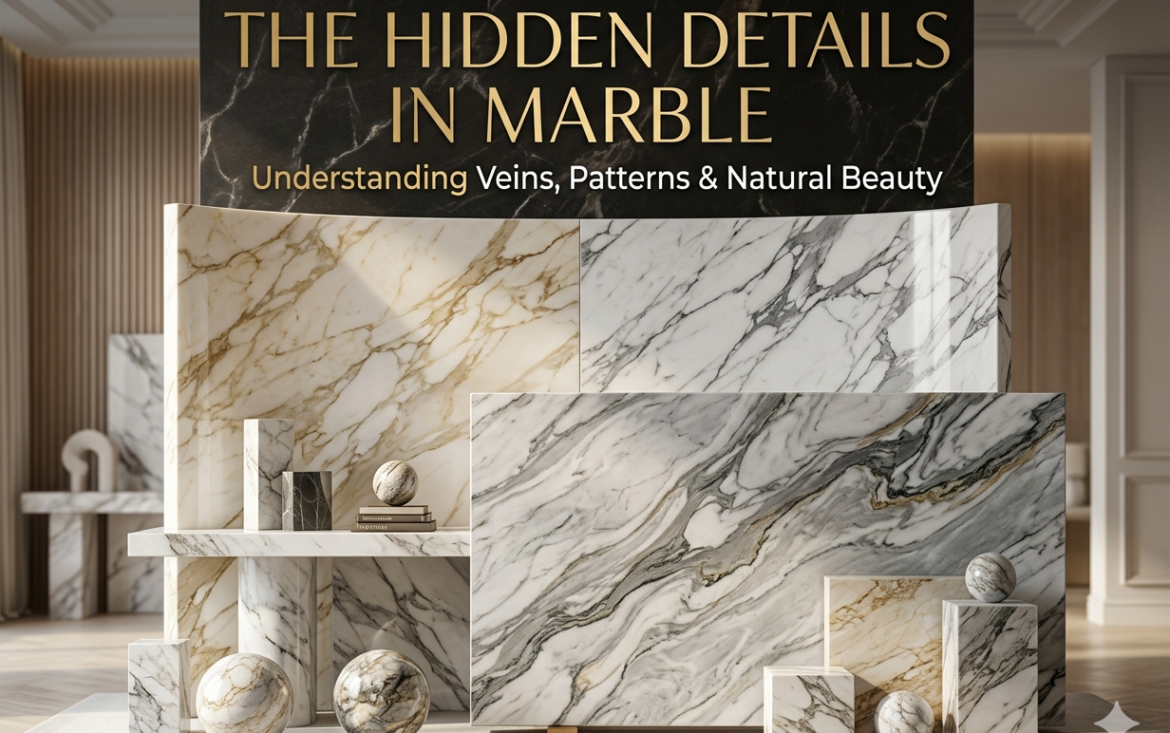
Marble is admired worldwide for its luxurious appearance, but what truly sets it apart is its intricate veining and natural patterns. These hidden details are what make every slab unique, turning ordinary surfaces into extraordinary design elements.
From subtle linear veins to bold artistic patterns, marble offers a wide range of visual textures that enhance interiors. Understanding these natural features helps homeowners and designers make better choices when selecting marble for flooring, walls, or countertops.
In this guide, we explore the science, types, and significance of marble veins and patterns, helping you appreciate the true beauty of this natural stone.
2. What Makes Marble Unique?
Marble is a metamorphic rock formed from limestone under intense heat and pressure. This process causes minerals to recrystallize, creating a dense structure with natural veins and patterns.
What makes marble stand out:
- Each slab is completely unique
- Natural veining adds character
- Wide range of colors and textures
- Ability to reflect light beautifully
- Enhances luxury and elegance
Premium marble sourced from the Best imported marble supplier in India often features more refined and visually appealing patterns.
3. The Science Behind Marble Veins
Marble veins are formed due to mineral impurities present during the stone’s formation. As limestone transforms into marble, minerals such as iron oxide, clay, sand, and graphite get trapped inside.
These minerals create the visible veins and patterns that define marble’s appearance.
Key Factors Influencing Veins:
- Pressure and temperature during formation
- Type of mineral impurities
- Geological conditions of the quarry
- Direction of crystal growth
The result is a natural artwork embedded within the stone, making each slab distinct.
4. Types of Marble Veining Patterns
Marble comes in a variety of veining styles, each offering a different visual impact.
Linear Veining
Straight and consistent lines running across the slab. Ideal for modern and minimalistic interiors.
Cloudy or Soft Veining
Subtle and diffused patterns that create a calm and elegant look.
Bold and Dramatic Veining
High-contrast veins that make a strong design statement. Often used in luxury spaces.
Brecciated Patterns
Fragmented and irregular patterns that resemble natural stone formations.
Book-Matched Patterns
Two slabs placed side by side to create a mirror image design, often used for feature walls.
You can explore these patterns in detail at a Premium marble showroom in India, where full slabs are displayed for better visualization.
5. How Patterns Influence Interior Design
Marble patterns play a significant role in shaping the overall look and feel of a space.
Light Veins for Spacious Feel
Soft and light veining makes rooms appear larger and brighter.
Bold Veins for Statement Designs
Dramatic patterns create focal points in living rooms or lobbies.
Consistent Patterns for Uniformity
Linear veining provides a clean and structured look.
Artistic Patterns for Luxury Appeal
Unique patterns enhance the exclusivity of interiors.
Choosing the right pattern depends on the design theme, lighting, and space size.
6. Natural Beauty vs Artificial Finishes
One of the biggest advantages of marble is its natural beauty, which cannot be replicated by artificial materials.
Natural Marble:
- Unique patterns
- Organic veining
- Timeless appeal
Artificial Materials:
- Repetitive designs
- Uniform patterns
- Limited uniqueness
While artificial materials may be more affordable, they lack the depth and character of natural marble.
Many buyers compare options after researching Italian marble flooring price India, as premium marble offers unmatched natural aesthetics.
7. How to Choose the Right Marble Pattern
Selecting the right marble involves more than just choosing a color.
Consider the Application Area
- Flooring: Subtle and consistent patterns
- Walls: Bold and artistic veins
- Countertops: Balanced patterns
Check Lighting Conditions
Natural light enhances marble patterns, while artificial lighting can highlight specific textures.
Inspect Full Slabs
Always view complete slabs instead of small samples to understand the overall pattern.
Buying from a High-quality marble slabs supplier India ensures access to well-processed slabs with clear and defined veining.
8. Quality Indicators in Marble Veins
Not all marble veins indicate high quality. Understanding what to look for is essential.
Signs of Good Quality:
- Natural and smooth vein flow
- Consistent color tones
- Minimal cracks or breaks
- Balanced distribution of patterns
Signs of Poor Quality:
- Irregular or broken veins
- Visible cracks or fillings
- Artificial-looking patterns
Working with the Best marble company in India helps ensure you select marble with authentic and high-quality veining.
9. Final Thoughts
Marble is more than just a construction material—it is a natural masterpiece shaped by geological processes over millions of years. Its veins and patterns tell a story of formation, pressure, and transformation.
Understanding these hidden details allows homeowners and designers to choose marble that not only enhances aesthetics but also reflects personal style and sophistication.
Whether you prefer subtle elegance or bold luxury, marble offers endless design possibilities that stand the test of time.
10. FAQs
1. What causes veins in marble?
Veins are formed by mineral impurities during the metamorphic process of marble formation.
2. Are marble patterns the same in every slab?
No, each marble slab is unique with its own natural pattern.
3. Which type of veining is best for flooring?
Subtle and consistent veining is ideal for flooring to create a uniform look.
4. Can marble patterns affect interior design?
Yes, patterns influence the overall aesthetic, making spaces look larger, brighter, or more luxurious.
5. Where can I see different marble patterns before buying?
You can visit a Premium marble showroom in India to explore various marble slabs and patterns in person.