-
dazemoonmarketing
- November 18, 2026
- No Comments
Author’s Note:
Italian marble is a trusted choice for homeowners, architects, and builders who want a front elevation that looks elegant, lasts for years, and makes a strong first impression. However, not every Italian stone performs well outdoors, and the most expensive variety is not always the best fit. By comparing stone types, finishes, and weather resistance, and by planning the cladding and fixing method carefully, buyers can create a stunning facade without overspending. This guide shares practical, experience-based advice to help you choose the right marble for your exterior with confidence.
Table of Contents
- Why Italian Marble Suits Front Elevation
- Top 10 Italian Marbles for Front Elevation
- How to Choose the Right Marble
- Installation and Maintenance Tips
- Where to Buy Authentic Italian Marble
- FAQ
The front elevation is the first thing visitors notice about a building, and the stone you choose defines its character for decades. Italian marble is admired worldwide for its fine crystal structure, elegant veining and refined finish. However, not every Italian stone performs equally outdoors, because strong sunlight, monsoon rain and dust demand careful selection. Working with the Best imported marble supplier in India helps ensure you receive genuine, graded material along with sound technical guidance. This guide lists ten Italian stones widely used for facades, entrances and wall cladding.
1. Why Italian Marble Suits Front Elevation
Italian marble suits front elevations because of its dense crystalline structure, refined appearance and long architectural track record, provided the right finish and sealing are used.
- Visual appeal: Natural veining gives every facade a unique character.
- Variety: Shades range from pure white to grey, beige and gold.
- Heritage: Italian quarries have supplied architectural stone for centuries.
- Caution: Marble is calcium carbonate and can react to acidic rain and pollutants, so sealing and finish selection are essential.
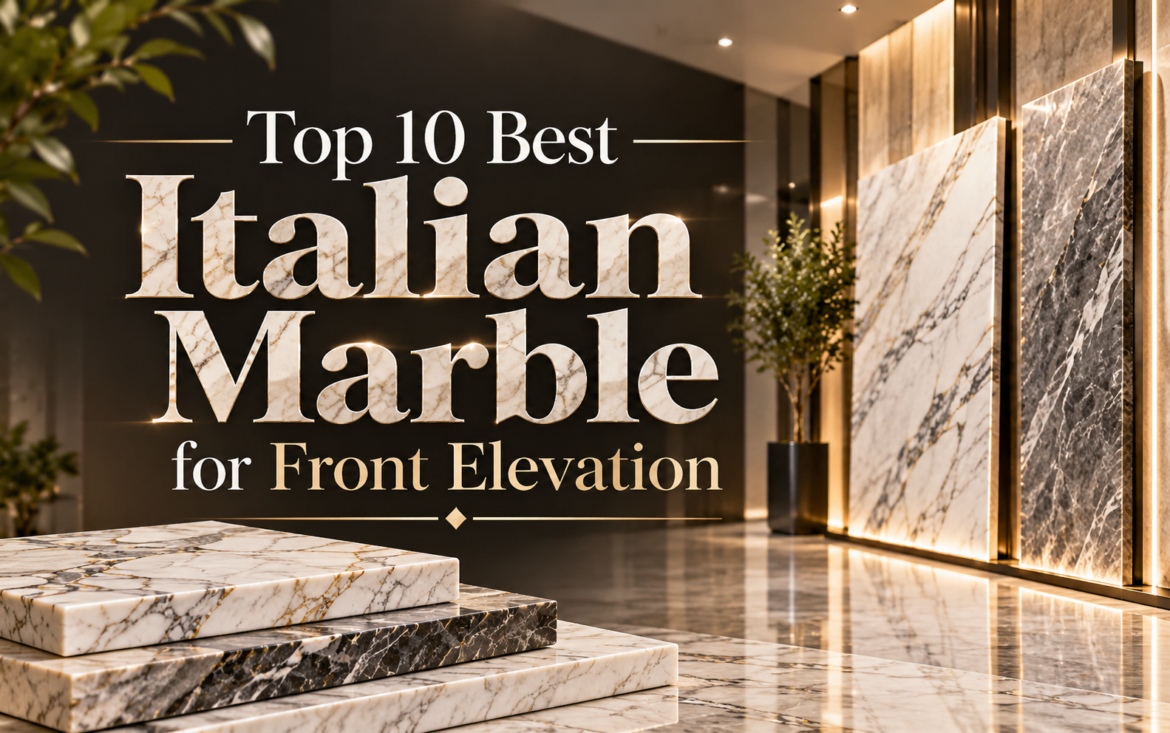
2. Top 10 Italian Marbles for Front Elevation
- Bianco Carrara: Soft white-grey with feathery veins from Tuscany. A timeless choice for modern and neoclassical facades.
- Calacatta: Bright white with bold, dramatic veining. Best for premium entrances and feature walls.
- Statuario: Clean white background with striking grey veins. Ideal for luxury villas and statement portals.
- Botticino Classico: Warm beige from Lombardy with a consistent tone. Popular for cladding large surfaces.
- Travertino Romano: Technically a travertine limestone with a warm, textured look. It performs well in a honed finish.
- Perlato Svevo: Creamy beige with subtle texture from Puglia. Suits contemporary elevations.
- Bardiglio: Blue-grey with darker veins. Adds contrast to white or beige facades.
- Arabescato: White with curving, web-like grey patterns. Works well for decorative panels and accents.
- Grigio Carnico: Dark grey with fine white veins from Friuli. Delivers a bold, modern look.
- Giallo Siena: Golden-yellow with brown veining from Tuscany. Gives a warm, Mediterranean character.
3. How to Choose the Right Marble
Start with your building’s design, climate and exposure. Light shades reflect heat, while darker stones show dust less but absorb more warmth. Prefer honed, brushed or flamed finishes over high polish, as they give better grip and hide weathering. Many homeowners begin by searching for Italian marble flooring price India, but for a front elevation, thickness, finish, block consistency and the anchoring system matter far more than a single figure. Always ask for a written quotation with clear specifications.
Installation and Maintenance Tips
- Use stainless steel dry-cladding fixings for vertical facades.
- Apply a quality penetrating sealer before and after installation.
- Clean with a pH-neutral cleaner and avoid acidic chemicals.
- Re-seal every one to two years, depending on exposure.
- Approve a sample slab and check batch consistency before bulk dispatch.
4. Where to Buy Authentic Italian Marble
Kishangarh in Rajasthan is one of Asia’s largest marble trading hubs, with a wide range of imported stone. A reliable Marble supplier in Kishangarh will show you full slabs, explain origin and grading, and provide dispatch support across India. If you want to compare imported stone options in person, Italian marble in Kishangarh is easy to source and inspect before you decide.
Final Thoughts: The right marble can raise a building’s appearance and value for many years. Match the stone to your design and climate, insist on a protective finish and verify slab quality before purchase. Choosing the Best marble shop in Kishangarh or a trusted Marble dealer in Kishangarh adds confidence through transparent sourcing and expert advice.
FAQs
1. Which Italian marble is best for exterior front elevation?
Bianco Carrara, Botticino Classico and Grigio Carnico are commonly preferred for exteriors, especially in honed or brushed finishes.
2. Is Italian marble suitable for outdoor use in India?
Yes, when properly selected, sealed and maintained. Heavy rain, pollution and direct sun make sealing and finish choice important.
3. Which finish is best for a marble facade?
Honed, brushed or flamed finishes are generally better than high polish because they resist weathering and look more uniform over time.
4. How can I check whether marble is genuinely Italian?
Ask for origin documents, the importer’s invoice and block or batch details, and inspect full slabs in person.
5. How often should an exterior marble facade be sealed?
Typically every one to two years, depending on weather exposure and the sealer used.